Common Problems with Mitsubishi Triton: Used Buyer Guide
Table of Contents
- Quick Answer: What Are the Common Problems with Mitsubishi Triton?
- Common Mitsubishi Triton Problems: Triton Faults by Model and Engine
- Which Mitsubishi Triton Do You Have? ML, MN, MQ and MR Explained
- ML Triton: Issues to Check
- MN Triton: Issues to Check
- MN Triton Overheating and Coolant Loss
- Head Gasket Concerns and Inspection History
- MQ Triton: Issues to Check
- MR Triton: Issues to Check
- DPF Warnings and Regeneration Concerns
- EGR and Intake-Related Concerns
- Mitsubishi Triton Engine Issues
- Transmission Symptoms to Check
- Automatic Transmission Checks
- Manual Gearbox and Clutch Checks
- Check Outstanding Australian Recalls
- How Reliable Is a Used Mitsubishi Triton?
- Used Triton Inspection Checklist: Problems to Check Before Buying a Mitsubishi Triton
- Repair Quote and Inspection Checklist
- Mitsubishi Triton Common Problems FAQs
- What are the most common problems with a Mitsubishi Triton?
- What should you look for when buying a used Mitsubishi Triton?
- Are there Mitsubishi Triton years to avoid?
- How reliable is a used Mitsubishi Triton?
- Is overheating a known problem on the MN Triton?
- Does the Mitsubishi Triton have DPF problems?
- Does the Mitsubishi Triton have gearbox problems?
- Are there Mitsubishi Triton recalls in Australia?
- Is a used ML or MN Triton affected by the Takata airbag recall?
- What is the difference between the ML, MN, MQ and MR Triton?
- Should you get a pre-purchase inspection on a used Triton?
Common problems with the Mitsubishi Triton depend heavily on which Triton you are looking at. The ML (released in Australia in July 2006), MN (August 2009), MQ (April 2015) and MR (early 2019) use different engines and gearboxes, and a fault reported on one should not be moved onto another. This Australian used buyer guide goes through the reported Mitsubishi Triton problems by model and engine, with ML Triton common problems, MN Triton common problems, MQ Triton common problems and MR Triton common problems each covered in turn: overheating and coolant loss on 4D56 high-power diesels, diesel particulate filter (DPF) and exhaust gas recirculation (EGR) concerns on the 4N15, manual gearbox wear on the MQ, transmission symptoms, Takata airbag and other recalls, and how to check a particular vehicle. “Common” is the wording people search with, not a measured failure rate. We found no source that publishes Triton failure rates, so this guide separates reported faults, official recalls and ordinary wear, names each source and its date where it has one, and says where a claim is an opinion from a workshop or retailer. It is not a diagnosis of any vehicle, and the same symptom can have several causes.
Quick Answer: What Are the Common Problems with Mitsubishi Triton?
- ML (2006 to 2009): the 3.2 litre 4M41 diesel is reported to suffer inlet manifold carbon build-up and suction control valve (SCV) failures. A steering column clunk is reported on both ML and MN models. The ML and MN are on the ACCC’s critical Takata airbag recall list.
- MN (2009 to 2015): Mitsubishi ran service campaign 020116 for overheating from coolant loss on 4D56 high-power (HP) diesels built before 18 March 2014. A campaign does not mean every MN is affected, and the history of the vehicle in front of you matters.
- MQ (2015 to 2018): the six-speed manual is reported to jump out of gear, usually third, with grinding in the first three gears. Mitsubishi has a repair kit. DPF and EGR concerns apply to the 4N15 diesel in the MQ and MR.
- MR (2019 on): the sources we found report few documented faults specific to the MR. Most reported concerns are the same DPF and EGR topics as the MQ.
- DPF warnings: a Brisbane diesel workshop blames short trips as the main cause, and CarsGuide says a faulty temperature sensor can give a false alarm. A warning alone does not prove the DPF needs replacing.
- Automatic gearboxes: we found no source naming a fault across a whole automatic range. Reader reports exist for individual vehicles.
- Recalls: there are recalls on every generation, from Takata airbags to a towbar wiring harness. Check by VIN, because a recall record does not show whether a particular vehicle was repaired.
- Reliability and years to avoid: we found no failure-rate data and no authoritative list of years to avoid. Evidence points to specific engines, build windows and service histories.
- What we did not find: failure rates, Mitsubishi technical service bulletins beyond the 4D56HP overheating campaign text, and any source dated for a recall repair status on a specific vehicle.
Common Mitsubishi Triton Problems: Triton Faults by Model and Engine
These are the Mitsubishi Triton common faults that the sources we found tie to a model or engine, with each labelled as a recall, a service campaign, a reported fault or ordinary wear. The numbering is for reference, not ranking. Nothing here is ordered by how often a fault occurs.
1. ML 3.2 litre 4M41 diesel: inlet manifold carbon and SCV
- Type: reported fault (australiancar.reviews, undated, and a 4WD accessories retailer’s buyers guide dated 1 June 2021)
- What is reported: carbon sludge blocking airflow, and suction control valve failures with surging
- Check: manifold cleaning history, surging at light throttle, SCV replacement records
2. ML and MN steering column clunk
- Type: reported fault (australiancar.reviews, undated)
- What is reported: two glued brackets on the steering column can come loose in normal use
- Check: clonking over bumps, and what was done to fix it
3. MN 4D56HP overheating and coolant loss
- Type: Mitsubishi service campaign 020116 (initiated November 2014)
- What is reported: overheating from excessive coolant loss on engines built before 18 March 2014
- Check: proof the campaign work was done, the “127 kPa” radiator cap sticker, cooling system history
4. ML and MN Takata airbag
- Type: recall (PRA 2016/15523), listed as critical by the ACCC for 2007 to 2014 ML and MN models
- What is reported: an ageing airbag inflator that may rupture in a crash
- Check: VIN check with Mitsubishi and the ACCC tools before the vehicle is driven
5. MQ six-speed manual jumping out of gear
- Type: reported fault (carsales, 7 December 2020, and CarsGuide, 10 December 2025)
- What is reported: slipping out of gear, usually third, and grinding in the first three gears. Mitsubishi has a repair kit
- Check: whether the kit was fitted, and a test drive under acceleration
6. MQ and MR 4N15 diesel: DPF warnings
- Type: reported concern (a Brisbane diesel workshop and CarsGuide), not a recall
- What is reported: regeneration that does not finish, DPF warning lights and forced regenerations
- Check: warning lights, stored fault codes, oil change history, driving use
7. MQ and MR 4N15 diesel: EGR and intake carbon
- Type: reported check point (carsales, 7 December 2020)
- What is reported: carbon deposits that block the EGR valve, with black smoke or poor revs
- Check: smoke and throttle response, and whether emissions equipment is intact
8. MQ and MR towbar wiring harness
- Type: recall REC-005048, only where the genuine accessory towbar harness was fitted
- What is reported: incorrect installation may let liquids reach the circuit and cause overheating or fire
- Check: whether a towbar is fitted and whether the recall work is recorded
9. Rear suspension, tray and underbody
- Type: ordinary wear and inspection (carsales, 7 December 2020)
- What is reported: rear springs that sag under heavy loads, and rust
- Check: ride height, tray floor and underbody for rust and damage
Which Mitsubishi Triton Do You Have? ML, MN, MQ and MR Explained
Model codes matter because the sources tie each fault to a generation or engine. Confirm the model code, build date and engine code from the compliance plate and VIN. australiancar.reviews, summarising a Mitsubishi ML recall, says the build date is on a firewall plate on early models or a B-pillar label on later ones.
1. ML Triton (July 2006 to 2009)
- Engines named in the sources: a 3.2 litre 4M41 turbo diesel and a 3.5 litre 6G74 petrol V6 at launch (a 4WD accessories retailer’s guide). australiancar.reviews adds a 2.4 litre petrol for an entry-level single cab GL from April 2007 and a 2.5 litre turbo diesel from May 2008
- Gearboxes: a five-speed manual and a four-speed automatic (CarsGuide)
- Source: australiancar.reviews says the ML was released in July 2006
2. MN Triton (August 2009 to 2015)
- Engine: the 2.5 litre 4D56HP turbo diesel (2009 to 2015, per the same retailer’s guide). australiancar.reviews says the MN single cab GL used a 2.4 litre petrol, and parts listings also show lower-output 4D56 versions, so confirm the engine for the vehicle in front of you
- Gearboxes: a five-speed automatic is listed on a CarsGuide page for a 2010 Triton GLX-R
- Source: australiancar.reviews says the MN was released in August 2009. CarAdvice reported the MN continuing alongside the new MQ for a runout period in 2015
3. MQ Triton (April 2015 to 2018)
- Engine: the 2.4 litre 4N15 turbo diesel, 133 kW and 430 Nm (CarsGuide, 2019 review)
- Gearboxes: a six-speed manual and a five-speed automatic (CarsGuide)
- Source: australiancar.reviews says the fifth-generation MQ was released in April 2015
4. MR Triton (early 2019 until the sixth generation arrived in 2024)
- Engine: the same 4N15 turbo diesel. The same review says the 2.4 litre petrol (94 kW, five-speed manual, rear-wheel drive only) carried over unchanged
- Gearboxes: a six-speed manual or a new six-speed automatic, replacing the five-speed (CarsGuide, 2019 review)
- Source: CarsGuide says the 2020 model year Triton was released in October 2019, eight months after the new Triton launched. australiancar.reviews says cab chassis production began in November 2018 and the model was released in January 2019. The MV that followed is not covered here
Not covered: the sixth-generation Triton that arrived in Australia in early 2024 (4X4 Australia), and petrol-specific faults. We found no petrol-specific fault reports for the MQ or MR.
ML Triton: Issues to Check
The ML ran from 2006 to 2009. The sources describe engine and steering faults, and a number of recalls covered in the recalls section below.
1. 3.2 litre 4M41 diesel: carbon build-up in the inlet manifold
- What the sources say: australiancar.reviews says exhaust gas from the EGR system mixes with oil mist from the crankcase ventilation system, and the resulting sludge eventually blocks airflow. It recommends regular manifold cleaning. A 4WD accessories retailer’s guide (dated 1 June 2021) names the same build-up as one of the main consistent issues on this engine
- Check: cleaning records, and surging at light throttle
- What this does not prove: carbon build-up is a deposit. It is not the same as a failed EGR valve, and only inspection separates them
2. 3.2 litre 4M41 diesel: suction control valve failure
- What the sources say: australiancar.reviews gives the symptoms as reduced performance under hard acceleration (about 1800 to 3000 rpm), surging during steady acceleration and higher fuel consumption. It says the valve is easily damaged by dirty diesel fuel and that failures have been reported around 60,000 km. The fix it gives is to replace the valve
- Check: whether the valve has been replaced and what fuel filter history exists
- What this does not prove: surging has other possible causes, and a blocked filter or worn injector can mimic a valve fault
3. 3.5 litre 6G74 petrol V6: piston slap
- What the source says: the retailer’s guide says owners reported “a batch suffering from excessive piston slap”, mostly fixed under warranty. That is one author’s report and we found no recall or Mitsubishi notice for it
- Check: engine noise from cold, and service records
4. Steering column clunk (ML and MN)
- What the sources say: australiancar.reviews says two glued brackets on the steering column, which are designed to collapse in a collision, can come loose in normal operation. It warns that permanently fixing them stops the column collapsing and increases injury risk in a front-end crash. The retailer’s guide says Mitsubishi replaced columns under warranty
- Check: clonking over bumps and on turning, and ask what repair was done. Ask a qualified repairer before accepting a permanent fix
What this does not prove
- A fault listed here does not mean every ML has it.
- Reports from one retailer or one site are not failure rates.
MN Triton: Issues to Check
The MN ran from 2009 to 2015. The sources centre on the 4D56HP diesel. Distinguish affected 4D56 high-power engines from other configurations, because the Mitsubishi campaign text applies to the high-power engine and we did not find a source saying the lower-output 4D56 is affected.
1. Overheating and coolant loss on 4D56HP engines
- What the sources say: see the overheating section below
- Check: campaign completion by VIN, the radiator cap sticker and cooling history
2. Timing belt
- What the sources say: the retailer’s guide says the 4D56HP uses a timing belt, not a chain, and says it needs replacing every 100,000 km. A Brisbane diesel workshop says the 4D56 has “a timing belt that must be replaced on schedule”. We did not find Mitsubishi’s own interval, so confirm it in the owner’s manual or with Mitsubishi
- Check: invoice or log showing the last belt change and its kilometres
3. Valve clearances
- What the source says: the retailer’s guide says the tappets need adjusting every 30,000 km, and calls the work expensive at a dealer. That is the guide’s statement, so confirm the interval with Mitsubishi
- Check: service records for the adjustment
4. SCV and carbon build-up
- What the sources say: the Brisbane workshop says the 4D56 is known for suction control valve faults and for EGR and intake carbon build-up. That is a workshop opinion without a failure rate
- Check: surging, smoke and cleaning history
5. Gearbox
- What the source says: the retailer’s guide says the automatic torque converter is “known for allowing too much slip at higher speeds”, and that a noisy third gear on manuals has been linked to towing. Both are the author’s statements. It calls burnt-smelling automatic fluid “a sign to walk away”
- Check: see the transmission section below
6. Chassis and towing use
- What the source says: the retailer’s guide links chassis failures on the MN to overloading, rear air bags and fast driving on rough roads while towing. That is the author’s view, not a Mitsubishi finding
- Check: dents at the back corners of the cab, tray and chassis condition, and the towing history
7. Steering column clunk
- What the sources say: see the ML section above
MN Triton Overheating and Coolant Loss
- The campaign: australiancar.reviews lists Mitsubishi service campaign 020116, initiated in November 2014, for vehicles with 4D56HP engines built before 18 March 2014. It says no VIN range is given on the page.
- Mitsubishi’s stated cause (as quoted by australiancar.reviews and the retailer): overheating may occur because of excessive loss of coolant caused by repetitive coolant evaporation. Localised evaporation could also occur after high-load driving such as towing heavy cargo. If head gasket sealing at the upper surface of the cylinder block was not adequate, because of surface roughness, coolant blow-by could occur and contribute.
- Campaign measures: the radiator cap was replaced with a high-opening-pressure type, identified by a “127 kPa” sticker. The coolant mix was changed from 30 per cent to 50 per cent. The engine computer was reprogrammed to detect coolant loss earlier.
- Production changes (as listed): new engine computer programming on 9 September 2013, coolant raised to 50 per cent on 22 November 2013, the cap pressure raised to 127 kPa from 109 kPa on 21 February 2014, and a smoother upper cylinder block surface from 18 March 2014, starting at engine number 4D56 UCFA9504.
- What was not addressed: australiancar.reviews says the measures “did not address the potential inadequacy of the head gasket sealing”.
- CarsGuide (answered 17 February 2025): a reader answer on a 2008 Triton says the overheating was deemed to come from a loss of coolant related to poor cylinder head gasket sealing, tied to a too-rough metal surface on the cylinder block.
- The retailer’s claims: its guide says Mitsubishi “has replaced numerous engines under warranty” and that Mitsubishi believes the issue is fixed on vehicles built on or after 18 March 2014. Neither claim comes with a number or a Mitsubishi document, so treat them as the author’s statements. It advises checking for the 127 kPa cap sticker and confirming whether the dealer campaign was done, and says to be cautious if the history is unclear.
What to check
- Ask Mitsubishi, using the VIN, whether campaign 020116 applies and whether it was completed.
- Look for the “127 kPa” sticker on the radiator cap, and ask for invoices for the cap and coolant.
- Check the build date and engine number against the 18 March 2014 change.
- Ask about towing history and any past overheating.
What this does not prove
- Overheating alone does not mean a head gasket has failed.
- The campaign does not mean every Triton, or every 4D56, is affected.
Head Gasket Concerns and Inspection History
- What the sources say: Mitsubishi’s campaign text names head gasket sealing at the cylinder block surface as a possible contributor, and australiancar.reviews says the campaign measures did not address it. The retailer’s guide does not name head gasket failures as such. CarsGuide’s Triton engine problems page says a symptom it describes can be due to a blown cylinder head gasket “or some other failure within the engine that is allowing combustion pressure into the cooling system”.
- What a buyer can do: ask for any record of a head gasket or cylinder head repair, and for a cooling system inspection by a qualified mechanic before purchase. The mechanic may test the cooling system and look for signs of combustion pressure in it.
- What this does not prove: a lack of records does not show a gasket has failed, and a repair record does not show the repair was right. Do not diagnose a head gasket from overheating alone, and do not assume every Triton is affected.
MQ Triton: Issues to Check
The MQ ran from April 2015 to 2018 and uses the 2.4 litre 4N15 turbo diesel. Do not transfer older ML or MN engine issues to the MQ. The 4N15 is a different engine and the reported concerns differ.
1. Six-speed manual: jumping out of gear
- What the sources say: carsales (Cliff Chambers, 7 December 2020) says manual Tritons can jump out of gear, usually third, and says a retro-fix was available from Mitsubishi service departments. CarsGuide (David Morley, answered 10 December 2025) calls it “a pretty well-known problem with this model”, says it appears to come from a gear selector problem that worsens as wear occurs, and links it to grinding when engaging the first three gears. It says Mitsubishi developed a transmission repair kit with reinforced gear selectors and synchronisers, and that fitting it means removing and disassembling the gearbox. australiancar.reviews reports the same pattern on the six-speed manual MQ
- Check: whether the kit was fitted and by whom, and a test drive that includes gentle acceleration in each gear
- What this does not prove: a retailer’s guide (dated 1 January 2022) says “not all manual gearboxes are affected, but many seem to be”. That is its author’s opinion, and we found no source giving how many are affected
2. Diesel clatter and valve clearances
- What the source says: carsales says excessive diesel clatter at start-up or under load “isn’t just an irritation” and links it to valve clearances that may need adjusting
- Check: start the engine cold, and ask for service records that mention valve clearance checks
3. EGR and DPF concerns
- What the sources say: see the DPF and EGR sections below
- Check: warning lights, smoke and stored fault codes
4. Exhaust manifold cracking on earlier builds
- What the source says: the retailer’s guide says earlier MQs commonly crack the exhaust manifold, that an improved part came late in the MQ run and that the fix should be covered by warranty. That is the author’s claim, not sourced data, and we found no Mitsubishi notice for it
- Check: exhaust ticking or leaks, particularly when cold
5. Intercooler hoses
- What the sources say: CarsGuide (a 2015 reader answer) says there is a healthy aftermarket supply of replacement intercoolers and pipework, so hose problems are not unknown. The retailer’s guide says the original hoses “will split at some stage”, which is its opinion
- Check: boost leaks, oil residue at hose joints and any replaced hoses
6. Rear springs, rust and underbody
- What the source says: carsales says rear springs under constant heavy loads will sag, giving a rough ride when unladen and potentially dangerous bottoming. It suggests about 100 mm of clearance between the tyres and the wheel arch on 4WDs, and says a used MQ should not show rust, allowing for minor underbody or tray damage. It suggests removing a bed liner to check the floor
- Check: ride height, the tray floor and the underbody
7. Recalls
- What the sources say: see the recalls section below
What this does not prove
- A fault listed here does not mean every MQ has it.
- A retailer’s or workshop’s claim is not a failure rate.
MR Triton: Issues to Check
The MR was released in early 2019 and runs the same 4N15 diesel. Do not transfer older ML or MN engine issues to MR models. Documented, model-specific faults for the MR are thin in the sources we found.
1. Overall reports
- What the sources say: CarsGuide’s review of the 2020 model (Matt Campbell, 26 November 2019) says there seemingly are not many major issues around the engine, transmission, automatic gearbox, clutch or suspension components. That was a launch-period review, written before any long-term use history existed
- Check: the service history and the questions below
2. DPF and EGR concerns
- What the sources say: see the DPF and EGR sections below. They apply to the 4N15 in both the MQ and the MR
- Check: warning lights, stored fault codes and oil change history
3. Intercooler connection oil seepage
- What the source says: the retailer’s guide says oil mist can seep past O-rings at the intercooler connections on the MR and says it was “fixed under warranty if the owner even notices”. That is the author’s claim
- Check: oil residue at intercooler connections
4. Infotainment and electrical behaviour
- What the source says: the retailer’s guide describes the infotainment as “temperamental”, with reported dropouts and reboots. Those are anecdotes
- Check: use the screen, connections and climate controls during the test drive
5. Warranty status
- What the sources say: a carsales specification page for a 2022 MR GLX lists a five year, 100,000 km warranty from first registration. CarAdvice’s review of the 2022 GLS says the longest potential cover on a new Triton was up to 10 years or 200,000 km. Those are new-vehicle terms and we did not verify what applies to a used vehicle
- Check: ask Mitsubishi, using the VIN, whether any cover remains and whether it transfers
6. Recalls
- What the sources say: see the recalls section below
What this does not prove
- Few documented MR faults does not show the MR has none.
- A short history in the sources does not predict how an individual vehicle will age.
DPF Warnings and Regeneration Concerns
This section covers the 4N15 diesel in the MQ and MR. Match guidance to the specific vehicle manual, because the warning wording and behaviour can differ.
- What the warnings mean (a Brisbane diesel workshop, shown as updated July 2026, with a byline of 22 October 2026): a “Check DPF System” message may appear before or instead of a “DPF system service required” message. The workshop says the second message means the soot level is beyond what the vehicle will burn off on its own, a steady light means the ute wants a proper regeneration, and a flashing light is the escalation. That staging is the workshop’s guidance.
- Causes the workshop gives: short trips and stop-start running, mass airflow or boost problems, a carbon-clogged EGR valve sticking open, tired injectors, sensor faults and wrong engine oil. It says short trips are the number one cause on the Triton. That is a general claim with no data behind it.
- CarsGuide (David Morley, answered 17 September 2021): on a 2019 Triton with six forced regenerations in 24,000 km, the answer said the owner’s driving habits may not let the engine reach the right temperature often enough. It also said “we’ve heard of a faulty temperature sensor on this model Triton” that can lead the DPF to give a false alarm, and that six regenerations in 24,000 km “sounds like an awful lot”. The reader said Mitsubishi had told them the vehicle was operating within its parameters. That is one reader’s account.
- Oil dilution (the workshop): it says that when regenerations keep being cut short, some fuel washes past the rings into the sump and the oil level creeps up. It advises shorter oil change intervals on vehicles that live in town, and gives no figure. It also says DPF-equipped diesels need low-ash oil.
- Fix attempts (the workshop): it says a steady highway run of around 15 to 20 minutes often lets an interrupted regeneration finish, and that a forced regeneration is done in the workshop with diagnostic equipment.
- Cost claim: the workshop says a new DPF costs roughly $1,500 to $4,000 or more on common utes. It gives no vehicle, date or source for that figure, so get a written quote for the vehicle in front of you.
- Recalls: we found no recall specific to the MQ or MR DPF in the sources we read.
What to check
- Warning lights on a cold start and on a test drive, including any message about DPF service
- Stored fault codes from a scan, which CarsGuide suggests as the way to tell whether the DPF and check-engine lights are related
- Service records showing oil changes, any DPF cleaning or forced regenerations, and why they were done
- How the vehicle was used: mainly short trips, or mostly highway running
- Whether the DPF and EGR are still fitted and working. carsales says systems that bypass the EGR contravene emissions regulations, so check your state’s rules before buying a vehicle that has been modified
What this does not prove
- A DPF warning alone does not prove the DPF needs replacing. The cause may be a sensor, the EGR valve, an injector or the way the vehicle is driven.
- A forced regeneration in the history does not mean the filter is damaged.
EGR and Intake-Related Concerns
- What the sources say: carsales says carbon deposits adhere to manifolds and block the EGR valve, affecting performance and costing sizeable amounts to rectify, and says diesels that blow black smoke or will not rev should be avoided. australiancar.reviews describes the same type of build-up on the ML’s 4M41: EGR exhaust mixing with crankcase oil mist and forming a sludge. The Brisbane diesel workshop says the 4D56 gradually coats its EGR valve and intake with carbon, and that a carbon-clogged EGR valve sticking open can stop a DPF clearing. A retailer’s guide (1 January 2022) says there is “little evidence of it being a huge issue with the 4N15”, which is its opinion.
- Carbon build-up versus a failed EGR valve: carbon build-up is a deposit, and a failed EGR valve is a component that has stopped working. They can cause similar symptoms such as poor throttle response or smoke, and cleaning may fix a build-up where it will not fix a failed valve. Only inspection separates them.
- Check: smoke on acceleration, throttle response, and whether any cleaning has been recorded.
- What this does not prove: smoke or a poor idle does not prove EGR trouble, and cleaning in the service history is not evidence of a fault.
Mitsubishi Triton Engine Issues
Mitsubishi Triton engine problems in the sources are tied to engine codes, so check the engine code first. Symptoms such as overheating, surging, smoke and warning lights are not diagnoses, and each section above separates a symptom from a confirmed component failure.
1. 3.2 litre 4M41 turbo diesel (ML)
- Reported: inlet manifold carbon build-up and suction control valve failures (australiancar.reviews and a retailer’s guide)
- Check: manifold cleaning and SCV records
2. 3.5 litre 6G74 petrol V6 (ML)
- Reported: one author’s report of a batch with excessive piston slap, mostly fixed under warranty
- Check: cold start noise and service history
3. 2.5 litre 4D56HP turbo diesel (MN)
- Reported: Mitsubishi service campaign 020116 for overheating from coolant loss on engines built before 18 March 2014. A workshop and a retailer also mention timing belt age, valve clearance adjustment, SCV faults and EGR and intake carbon
- Check: campaign proof, belt history and cooling system history
4. 2.4 litre 4N15 turbo diesel (MQ and MR)
- Reported: DPF regeneration and warning concerns, EGR and intake carbon, diesel clatter that may relate to valve clearances, and claims of exhaust manifold and intercooler hose problems on earlier builds
- Check: warning lights, fault codes, oil change history and boost leaks
5. 2.4 litre petrol (MQ and MR)
- Reported: we found no petrol-specific fault reports
- Check: the usual service history and condition checks
Transmission Symptoms to Check
Identify the gearbox, the model and the build year before judging a symptom. We found no source naming a fault across an entire transmission range, and this guide does not label any range unreliable.
Automatic Transmission Checks
- ML (four-speed) and MN (five-speed): CarsGuide lists a four-speed automatic on the ML and a five-speed automatic on a 2010 GLX-R. The retailer’s guide says the torque converter is known for allowing too much slip at higher speeds, and that some owners fit a manual lock-up switch. It calls burnt-smelling fluid “a sign to walk away”. Those are the author’s statements. australiancar.reviews lists no automatic fault for the ML. The February 2007 recall that mentions a four-speed automatic was a compliance plate error, not a gearbox defect.
- MQ (five-speed) and MR (six-speed): carsales says the automatic “reportedly works fine in most off-road situations”. The retailer’s guide calls both units well regarded, which is an opinion from a company that sells parts for these vehicles. It suggests servicing the automatic about every 75,000 km and criticises Mitsubishi’s interval, again as opinion.
- Reader reports (CarsGuide): a 2015 reader described shuddering at 60 to 80 km/h and a gearbox that jumped after a cold start, and the answer pointed to an electronic issue. A 2016 answer by Graham Smith said other Triton owners complain about a vibration on takeoff. An answer from 17 April 2024 on a 2019 Triton that would not reverse up an incline said that if only reverse is affected, worn internal parts that lock reverse are the likely cause, and advised a transmission specialist. These are individual cases, not a pattern.
- No dipstick: CarsGuide (23 April 2025) says the transmission is a sealed system with no level check, and that fluid is checked at service by draining and refilling it from underneath.
What to check
- Smooth shifts hot and cold, and any shudder on takeoff
- Reverse engagement, including on a gradient
- Records of automatic transmission fluid changes
- Towing or heavy use in the history
- A burnt smell from the fluid, if a mechanic can sample it
What this does not prove
- A shudder or vibration does not identify the cause. CarsGuide’s 2015 answer pointed to an electronic issue.
- An opinion that a gearbox is strong does not show the one you are buying is.
Manual Gearbox and Clutch Checks
- MQ six-speed: see the MQ section above. carsales, CarsGuide and australiancar.reviews all report jumping out of gear and grinding in the first three gears, and Mitsubishi has a repair kit.
- ML and MN manuals: the retailer’s guide says third gear seems to be the first to suffer, which it links to towing, and says a noisy third gear means reconditioning or replacing the gearbox. That is the author’s view.
- Clutch versus gearbox: a CarsGuide answer on gear problems says three things can cause a symptom: the clutch, the gear selectors or something internal in the gearbox. It adds that a worn or collapsed bearing or damaged gear cluster would usually bring other symptoms, such as loud noises. Clutch symptoms and internal gearbox faults can overlap, so ask a mechanic to separate them.
What to check
- Jumping out of gear under gentle acceleration and on overrun
- Grinding when engaging first, second and third
- Noise in third gear under load
- Whether a repair kit or gearbox rebuild is recorded
- Clutch replacement history and towing use
What this does not prove
- Jumping out of gear does not prove the gearbox needs a full rebuild.
- A clean test drive does not prove a gearbox will last.
Check Outstanding Australian Recalls
The recalls below are examples we found, not an exhaustive list. A recall record shows the campaign existed, not whether a particular vehicle was repaired. australiancar.reviews makes a similar point: the number of recalls should not be taken as an indication of a model’s reliability or safety more generally. Check each vehicle by VIN with Mitsubishi.
1. Takata airbag inflator (ML and MN, 2007 to 2014)
- What it is: PRA 2016/15523, published 12 July 2016, campaign 010119 and 57,025 affected vehicles. The inflator propellant can degrade with heat and humidity as it ages, and the metal housing may rupture in a collision
- Status: the ACCC’s Takata list shows ML and MN Triton, 2007 to 2014, with a CRITICAL label. The ACCC says critical and alpha labels are for airbags the manufacturer specifies as posing a significantly higher risk of injury or death. An ACCC media release (undated on the page we read) listed 3,254 critical Mitsubishi vehicles, 2007 to 2014 ML and MN Triton
- Advice on the page: owners of critical vehicles are advised to stop driving the vehicle and immediately arrange airbag replacement. The ACCC release says drivers are entitled to have the vehicle towed to the dealership by the manufacturer and the airbag replaced for free
- How to check: the Mitsubishi recall page, IsMyAirbagSafe.com.au or the ACCC’s ProductSafety.gov.au. The ACCC says most affected vehicles have been accounted for, but some are still in circulation
2. MQ and MR towbar wiring harness (REC-005048)
- What it is: 2015 to 2019 MQ and MR Triton, 102,616 affected units, original published date 12 March 2020 and last updated 27 January 2022. Incorrect installation of the genuine accessory towbar wiring harness, where fitted, may let liquids reach the electrical circuits and may cause overheating, burning or fire
- Remedy: the notice says Mitsubishi will write to affected owners, and the dealer will reinstall the harness free of charge. Only vehicles with this accessory may be affected
3. MQ side step cover rivets (REC-001049)
- What it is: 2015 to 2017 Triton, 13,876 affected units, published 6 May 2019. The rivets for the side step cover may corrode and fracture, particularly with salt or anti-freeze exposure, and the cover may drop off
4. MN lower control arm and front propeller shaft welds
- What it is: a November 2013 recall for improper welding on front suspension lower control arms on 2011 and 2012 model year vehicles built before 11 May 2012 (PRA 2013/13839). A second recall covers improper welding on front propeller shafts manufactured before 25 November 2011, where a failed weld may break the shaft and damage the fuel pipe (PRA 2013/13844, REC-001012, 584 Triton and Challenger units)
5. ML rear axle U-bolts and front ball joint bolts
- What it is: a March 2009 recall for micro-cracks in the bent portion of the rear axle U-bolt (REC-003180, PRA 2009/10643, 14,923 units). A May 2010 recall (REC-003300, PRA 2010/11689) for bolts attaching the ball joints to the upper arms of the front suspension, which may not have been tightened enough, on Tritons built October 2006 to January 2009. Media reports of the time put it at about 42,500 vehicles
6. Lighting switch connectors (REC-001032)
- What it is: a multi-model recall (PRA 2016/15466) for turn signal and lighting switch connector terminals that may become worn during switch operation due to insufficient rigidity. The 383,379 units on the notice cover all models in the recall, not the Triton alone. australiancar.reviews lists it against the MN and dates it June 2016
7. Remote keys (REC-005634)
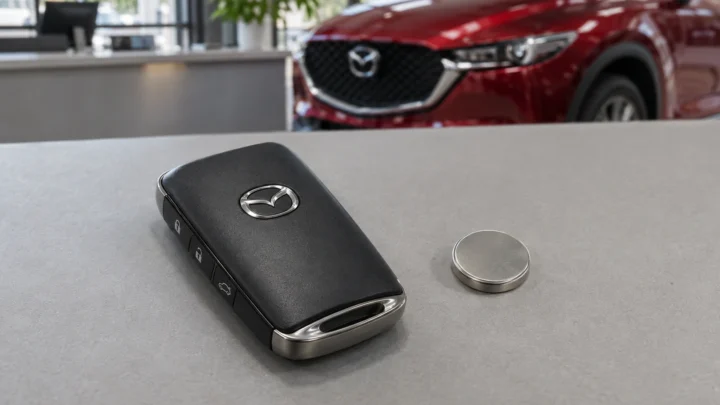
- What it is: a June 2023 recall of some remote keys on 2020 to 2022 model year Mitsubishi vehicles including the Triton. The keys were sold without warning information required for button and coin batteries. Only vehicles on the attached VIN list are affected
8. Power front seats (ML and MN 4WD double cab)
- What it is: CarAdvice reported a recall of 2,467 four-wheel-drive double cab Tritons built between 2007 and 2013 with power front seats, because of a power seat fault that could melt or burn seat components. Check by VIN whether the work was done
9. Accessories
- What it is: accessories can carry their own recalls. A November 2015 recall covered MQ double cabs fitted with Mitsubishi genuine soft tonneau covers, where 14 mm rivets were supplied instead of 17 mm and the cover might not attach securely (PRA 2015/15031, per australiancar.reviews). A canopy recall for one brand (PRA 2021/18895) covered canopies sold from 22 May 2018 to 19 February 2021, where the light fitting or pin switch may have been incorrectly assembled, creating a risk of electrical fire. The towbar harness recall above is a genuine accessory
- Check: whether a towbar, canopy, tonneau or other accessory is fitted, and whether any recall work is recorded
What this does not prove
- A recall does not mean a vehicle is unsafe today. It may have been repaired.
- No recall record does not mean a vehicle has no faults.
How Reliable Is a Used Mitsubishi Triton?
Mitsubishi Triton reliability cannot be reduced to one score, and we found no Triton failure rates or reliability scores from a source we could verify. We have not invented any. What exists is a mix of reviewer opinion, retailer and workshop opinion, reader questions and official recalls. The evidence supports checking the specific vehicle rather than judging the whole model.
- Reviewer opinion: CarsGuide’s review of the 2020 model (26 November 2019) says there seemingly are not many major issues around the engine, transmission, automatic gearbox, clutch or suspension components. A CarsGuide page for the 2006 Triton (undated) says the Triton is generally a tough vehicle where owners experience little trouble, and that most problems are minor, such as engine oil leaks.
- Retailer opinion: a 4WD accessories retailer calls the 4N15 “largely reliable” and the MN “trouble-plagued”. It sells parts for these vehicles, so treat both as opinions.
- What matters most when buying: a CarsGuide answer to a buyer asking about the most reliable 4×4 diesel ute (Graham Smith, 8 February 2019) said service history, odometer reading and previous use matter most, and that buying a used ute unseen is risky.
- Where the evidence points: specific engines and build windows, such as 4D56HP engines built before 18 March 2014, the MQ six-speed manual, and DPF and EGR on the 4N15.
What this does not prove
- A reviewer’s opinion is not a reliability score.
- No reported fault for a model or year does not mean there is none.
Used Triton Inspection Checklist: Problems to Check Before Buying a Mitsubishi Triton
What to look for when buying a used Mitsubishi Triton depends on the model and engine. Tailor the inspection accordingly. The checklist below combines the points above with service history and prior repairs.
- VIN and recalls: a Mitsubishi recall check by VIN, including the Takata airbag status on ML and MN models
- Model and engine: the model code, build date and engine code from the compliance plate and VIN
- Service records: a complete book or invoices, including the most recent timing belt service on 4D56 models, oil changes, and any gearbox or DPF work
- Prior repairs: records of engine replacement, head gasket or cylinder head work, gearbox rebuild or repair kit, and DPF cleaning
- MN 4D56HP built before 18 March 2014: proof the cooling campaign was done, the “127 kPa” radiator cap sticker, coolant level and any history of overheating
- MQ manual: jumping out of gear under gentle acceleration and grinding in the first three gears
- MQ and MR diesel: warning lights, stored fault codes, black smoke, throttle response, clatter and any removed or bypassed emissions equipment
- ML and MN steering: clonking from the steering column
- Underbody and tray: rust, damaged or missing bash plates, rear spring sag, and dents at the back corners of the cab
- Towing and load history: signs of overloading, particularly on the MN chassis
- Accessories: a towbar, canopy or tonneau, and any recall work recorded against them
- Independent inspection: an independent pre-purchase inspection by a qualified mechanic. It can check the items above, but it cannot predict a future fault
Repair Quote and Inspection Checklist
If an inspection or a mechanic finds a fault, get the work and cost in writing before you buy or authorise anything.
- Ask for a written, itemised quote that names the vehicle, the work, the parts, the labour and GST
- Ask whether the quote covers diagnosis only or the repair, and what happens if more work is found
- Get a second opinion on any large repair, such as an engine, gearbox or DPF job
The Western Australian Consumer Protection page (updated 4 December 2023) advises asking for a written quote or estimate detailing the work and cost, says an accepted quote forms a contract binding both sides, and says you should not automatically authorise additional repairs. It also says the Australian Consumer Law requires repairs to be done with due care and skill, including when second-hand parts are used. That page covers Western Australia, so check your own state’s consumer affairs body.
Mitsubishi Triton Common Problems FAQs
What are the most common problems with a Mitsubishi Triton?
It depends on the model and engine, and we found no failure-rate data. Reported issues include inlet manifold carbon build-up and SCV failures on the ML 3.2 litre diesel, overheating from coolant loss on MN 4D56HP diesels built before 18 March 2014, manual gearbox jumping out of gear on the MQ, and DPF and EGR concerns on the 4N15 diesel in the MQ and MR. There are recalls on every generation, so check by VIN.
What should you look for when buying a used Mitsubishi Triton?
Start with a VIN recall check and the model, build date and engine code. Check the service history and prior repairs, then inspect the items for that model: the cooling campaign proof on MN 4D56HP diesels, manual gearbox behaviour on the MQ, warning lights and fault codes on MQ and MR diesels, and the underbody and rear springs. Finish with an independent pre-purchase inspection.
Are there Mitsubishi Triton years to avoid?
We found no authoritative list of years to avoid, and we do not give a blanket one. The evidence ties specific issues to specific engines, build dates and uses. For example, the overheating campaign applies to 4D56HP engines built before 18 March 2014, the Takata critical recall covers 2007 to 2014 ML and MN models, and the manual gearbox concerns relate to the MQ. Compare the build date, engine and condition of the vehicle in front of you.
How reliable is a used Mitsubishi Triton?
We found no verified failure rates or reliability scores. CarsGuide’s launch-period review of the 2020 model says there seemingly are not many major issues, and a retailer calls the 4N15 largely reliable, but those are opinions. A CarsGuide answer says service history, odometer reading and previous use matter most, so judge the specific vehicle.
Is overheating a known problem on the MN Triton?
Mitsubishi ran service campaign 020116 from November 2014 for overheating from excessive coolant loss on 4D56HP engines built before 18 March 2014. The campaign changed the radiator cap, coolant mix and engine computer, and australiancar.reviews says it did not address the potential inadequacy of the head gasket sealing. It does not mean every MN is affected, and overheating alone does not prove a head gasket has failed. Ask Mitsubishi by VIN whether the work was done.
Does the Mitsubishi Triton have DPF problems?
DPF warnings and regeneration concerns are reported on the 4N15 diesel in the MQ and MR. A Brisbane diesel workshop says short trips are the main cause, and CarsGuide says a faulty temperature sensor can give a false alarm. We found no recall for it. A warning alone does not prove the DPF needs replacing, so get a scan and a written quote before accepting a replacement.
Does the Mitsubishi Triton have gearbox problems?
The best-supported concern is the MQ six-speed manual jumping out of gear, usually third, with grinding in the first three gears. Mitsubishi has a repair kit with reinforced gear selectors and synchronisers. We found no source naming a fault across a whole automatic range, only reader reports on individual vehicles, so check each gearbox on a test drive and in its records.
Are there Mitsubishi Triton recalls in Australia?
Yes. Examples include the ML and MN Takata airbag recall, the MQ and MR towbar wiring harness recall, the MQ side step cover rivets recall, and welding recalls on MN suspension and propeller shafts. These are examples, not a full list. Check each vehicle by VIN with Mitsubishi, and check fitted accessories separately.
Is a used ML or MN Triton affected by the Takata airbag recall?
The ACCC lists the 2007 to 2014 ML and MN Triton as a critical Takata recall, and its page advises owners of critical vehicles to stop driving and arrange airbag replacement. Many have been repaired, but some are still in circulation, so check the VIN with Mitsubishi and the ACCC tools before you drive the vehicle.
What is the difference between the ML, MN, MQ and MR Triton?
They are generations with different engines. The ML (from July 2006) offered 3.2 litre diesel and petrol engines, the MN (from August 2009) used the 2.5 litre 4D56HP diesel, and the MQ (from April 2015) and MR (from early 2019) use the 2.4 litre 4N15 diesel. The sources tie faults to these codes, so confirm the code before applying any advice.
Should you get a pre-purchase inspection on a used Triton?
An independent inspection can check the items in this guide: recall status, cooling system history, gearbox behaviour, warning lights and underbody condition. CarsGuide says buying a used ute unseen is risky and that service history and previous use matter most. An inspection cannot predict a future fault, but it can show what is wrong now.

Looking for this part?
Send one enquiry and reach Australian suppliers who handle your vehicle.
Request a quote