Ford Everest Reliability Issues: Common Problems & Engine Guide
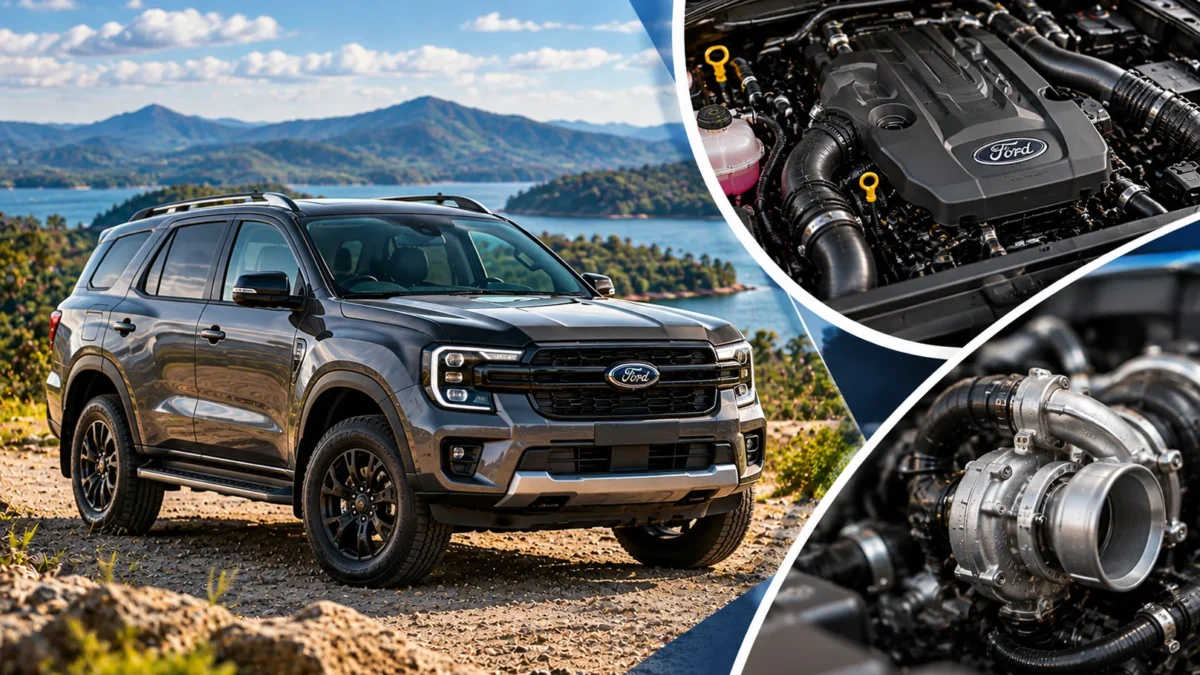
Table of Contents
- Quick Answer: Is the Ford Everest Reliable?
- Ford Everest Reliability Issues at a Glance
- Ford Everest Engines at a Glance (Where to Find the Full Specs)
- Is the Ford Everest Reliable?
- Common Ford Everest Problems
- Ford Everest V6 Diesel Reliability and Problems
- The Camshaft Sprocket Recall (2022–2025)
- The Turbo Oil Return Line Leak (Not a Recall)
- A Note on V6 Durability
- Ford Everest 2.0 Bi-Turbo Problems
- Ford Everest 3.2 Reliability
- Engine Warning Signs and Checks
- Ford Everest Years and Models to Check Before Buying
- Maintenance, DPF Checks and Engine Lifespan
- Servicing
- DPF Checks
- Engine Lifespan
- Ford Warranty: What It Means for Engine Faults
- Repair or Replace a Ford Everest Engine?
- What to Check Before Buying a Used Ford Everest
- Ford Everest Reliability Issues FAQs
- Are Ford Everests reliable?
- Is the Ford Everest V6 reliable?
- What year Ford Everest should I avoid?
- Is the Ford Everest expensive to maintain?
- Does the Ford Everest V6 have a recall?
- Is the Ford Everest 2.0 bi-turbo reliable?
- Does the Ford Everest have a wet belt?
- Does the Ford Everest have a DPF?
- Is the Ford Everest 3.2 reliable?
- Which Ford Everest engine is the most reliable?
- Should I buy a used Ford Everest?
Ford Everest reliability issues depend heavily on which engine is under the bonnet. In Australia the best-documented engine item is a 2025 recall for a camshaft sprocket that could fracture on the 3.0-litre V6 diesel, and Ford has since confirmed a separate V6 turbo oil return line leak and released a fix. The 2.0 bi-turbo has no engine recall but a repeated owner and workshop focus on its wet timing belt, and Ford has now dropped it. The earlier 3.2 five-cylinder has no engine recall on the register. This guide takes each engine in turn and keeps recalls apart from owner reports.
Quick Answer: Is the Ford Everest Reliable?
- V6 diesel (Next-Gen, 2022 on): one engine recall (REC-006341) for a camshaft sprocket that may fracture, covering 13,490 Ranger and Everest vehicles from 2022 to 2025. Ford also confirmed a turbo oil return line leak, fixed under warranty with a redesigned part.
- 2.0 bi-turbo (2019 to 2025): no engine recall found. Concern centres on its wet belt, EGR cooler and AdBlue system, mostly from workshop and owner sources. Ford has withdrawn it in 2026.
- 3.2 five-cylinder (2015 to 2022): no engine recall on the register. Short-trip use and the DPF are the usual cautions.
- Gearbox is a separate matter: the 10-speed automatic has its own recalls. They are covered briefly below and in our Ranger gearbox guide.
Ford Everest Reliability Issues at a Glance
3.0 V6 camshaft sprocket fracture
- Applies To: 3.0L Lion V6 diesel, 2022–2025 builds
- Typical Symptoms: Engine stall and sudden loss of power
- Severity: High. Official recall (REC-006341)
- Status: Confirmed. Check your VIN
3.0 V6 turbo oil return line leak
- Applies To: 3.0L V6 diesel, Next-Gen Ranger and Everest sold since 2022
- Typical Symptoms: Oil seepage near the turbo
- Severity: Moderate. Ford calls it random and not terminal
- Status: Confirmed by Ford, no recall. Fix fitted under warranty
2.0 bi-turbo wet belt wear
- Applies To: 2.0L bi-turbo diesel, 2019–2025
- Typical Symptoms: Oil contamination, noise, in the worst case oil starvation
- Severity: High if ignored
- Status: Workshop and owner reports. No recall found
2.0 bi-turbo EGR cooler and AdBlue faults
- Applies To: 2.0L bi-turbo diesel
- Typical Symptoms: Smoke, rough running, coolant loss, limp mode
- Severity: Moderate to high
- Status: Workshop-reported pattern, not a recall
3.2 five-cylinder, short-trip DPF problems
- Applies To: 3.2L diesel, 2015–2022
- Typical Symptoms: Warning lights, limp mode
- Severity: Moderate
- Status: Pattern linked to how the vehicle is used
10-speed gearbox recalls
- Applies To: Various Everest builds
- Typical Symptoms: Loss of drive, unexpected Park shift, failure to reverse
- Severity: High. Official recalls
- Status: Confirmed. Not an engine fault
Not every Everest has any of these. Most run for years without an engine fault, and the cars that do tend to share a pattern: an unfinished recall, a missed belt or oil service, or short-trip diesel use.
Ford Everest Engines at a Glance (Where to Find the Full Specs)
You need to know which engine you have before any of the rest applies. Full specifications and option-by-option detail belong in our Ford Everest engine guide, so this is a short map only.
UA Everest, 2015–2022
- 3.2L five-cylinder diesel: 143 kW and 470 Nm, six-speed automatic. It was the only engine on the entry-level Ambiente in 2019
- 2.0L bi-turbo diesel (from the 2019 update): 157 kW and 500 Nm, 10-speed automatic. Standard on Titanium and optional on Trend
Next-Gen Everest, 2022 on
- 2.0L bi-turbo diesel: About 154 kW and 500 Nm. It became the standard engine and replaced the 3.2
- 3.0L Lion V6 turbo-diesel: 184 kW and 600 Nm. The flagship engine, with a 10-speed automatic
Everest from 2026
- 2.0L single-turbo diesel: Revised, about 125 kW and 405 Nm, with a new timing chain and fuel injection. It replaces the bi-turbo as the entry engine
- 3.0L V6 diesel: Continues, with wider availability reported
Australia has been diesel-only for the Everest as far as the sources we checked show, so “Everest petrol” listings are not an Australian-market engine. The single-turbo 2.0 was not offered on the Everest in Australia before 2026. That matters because faults reported on the bi-turbo should not be assumed for the new single-turbo.
Is the Ford Everest Reliable?
This section answers “Are Ford Everests reliable?” and “Is the Ford Everest reliable in Australia?” without pretending there is one answer.
It depends on three things: the engine, the build year and the maintenance history. A V6 with its recall completed and a documented oil service history is a different car from a bi-turbo with no belt record.
What counts against it: the 2025 V6 camshaft sprocket recall, the V6 oil return line leak Ford has acknowledged, the bi-turbo’s wet belt concerns, and a run of gearbox recalls on the 10-speed automatic. The 2026 gearbox re-notification shows some vehicles from the 2017–2019 build window were still unrepaired years later.
What counts in its favour: the register lists no engine recall for the 3.2 or the 2.0 bi-turbo, the camshaft sprocket recall carries a free remedy, and Ford has publicly stated a fix for the oil return line. Ford’s standard warranty has been five years with unlimited kilometres.
Owner sentiment: Buyers guides and workshops split. Some authors prefer the 3.2 for simplicity, others prefer the bi-turbo or V6 for performance. Those are opinions. The one buyers guide that voices serious doubt about the V6 does not name specific failure data we could verify.
The honest summary: There is no clean answer for “the Everest”. The best-documented engine problem is on the V6, and the best-documented ongoing owner concern is the bi-turbo’s wet belt. Neither means every one fails.
Common Ford Everest Problems
This is a summary of verified items. The engine sections below give the detail.
V6 camshaft sprocket recall (REC-006341)
- Applies To: 3.0L V6 Everest and Ranger, 2022–2025
- Detail: See the V6 section below
- Engine Related: Yes
10-speed transmission fluid pump gear failure
- Applies To: Ranger and Everest with the 10-speed, built around 2017–2019
- Detail: A 2020 recall, then a July 2026 re-notification covering 2,572 vehicles. Everest builds are listed from 27 November 2017 to 29 June 2019
- Engine Related: No. Transmission fault
Low-speed unintended Park shift
- Applies To: Everest, 2021–2022 builds (REC-005759) and a later action for 2022 (REC-006541)
- Detail: A software issue could shift the transmission into Park below 6 km/h when the battery is low
- Engine Related: No
Transmission valve body (REC-006409)
- Applies To: 2025 builds, Mustang, Ranger and Everest
- Detail: A manufacturing defect could stop the vehicle reversing or let it move unexpectedly
- Engine Related: No
Other recalls on the register
- Examples: Tow bar hitch weld on 2021 Everests (REC-006429, 701 vehicles), power window auto-reverse software (REC-006100, 38,423 Everest and Transit Custom vehicles), driver’s seatbelt assembly (REC-005639), and steering shaft weld, airbag initiators and seat frame welds on earlier UA builds
- Engine Related: No
If you want the full gearbox picture, see our guide to Ford Ranger gearbox issues, which covers the same 10-speed transmission.
Ford Everest V6 Diesel Reliability and Problems
This section covers “Ford Everest V6 diesel problems” and “Is the Ford Everest V6 reliable?” The 3.0-litre Lion V6 turbo-diesel is the flagship engine in the Next-Gen Everest, and its evidence is kept separate from the other engines here.
The Camshaft Sprocket Recall (2022–2025)
What the register says: REC-006341 (campaign 25S39) covers Ford Ranger and Everest models with the 3.0L Lion engine built 2022 to 2025, affecting 13,490 vehicles across both models. The defect notice says “the left-hand engine camshaft sprocket may fracture,” which could stall the engine and cause a sudden loss of power while driving. The remedy is a free inspection and repair at a Ford dealer. The recall notice is dated 30 April 2025. Reporting at the time listed the Everest variants as Sport, Wildtrak and Platinum, and said the 2.0 bi-turbo was not affected.
Symptoms: The register names a stall and sudden loss of power. There is no reliable pre-warning symptom, which is why the VIN check matters more than waiting for a sign.
What to check: Enter the VIN on the Australian Government’s vehicle recall register or call the Ford Customer Relationship Centre on 133 673, and ask whether the campaign is open or completed. If you are buying, ask for written proof of completion.
How serious is it? High. A sudden stall at speed is a safety event.
Repair or replace? The recall remedy is free. If an engine has already stalled and suffered damage, the diagnosis decides the next step, and a quote for both repair and a replacement engine is worth getting.
The Turbo Oil Return Line Leak (Not a Recall)
What Ford has said: In mid-2026 Ford confirmed a manufacturing issue on the V6: the turbocharger oil return line can leak, with Ford describing “oil seepage related to the turbo oil return line.” Ford traced it to an assembly process at its UK engine plant that could stress the line’s O-ring groove, occasionally causing a leak over time. Ford is not issuing a recall. The fix identified in October 2025 reached dealers in early 2026: a redesigned, slightly longer drain tube that can be fitted without removing the turbo, covered under warranty. The factory process was changed in late 2025.
How common is it? Reports differ. Carsales wrote on 30 June 2026 that about 130,000 Lion V6 Rangers and Everests have been sold in Australia since 2022 and that “the vast majority will have this issue built-in.” Ford says the leak is random and not terminal and has affected only a small percentage. Treat both statements as reported, not as a measured failure rate.
Symptoms: Oil on or around the turbo area, oil smell and a falling oil level between services.
What to check: The area around the turbo and drain tube for oil, the dipstick, and whether the dealer has fitted the updated part. If you are buying, ask for the service record to show it.
Severity: Moderate if caught early. Low oil is serious if ignored.
Cover: Ford says affected owners should contact their dealer and the part is covered under warranty. We did not find a statement about out-of-warranty vehicles, so ask Ford.
A Note on V6 Durability
One Australian buyers guide author writes that he is “not convinced about the durability of this engine,” citing oil starvation and crankshaft failures in early models. That is one author’s concern, and we could not verify the specifics. Evidence we could verify: one recall (the sprocket) and one confirmed manufacturing issue (the oil return line).
Practical read for V6 buyers: Confirm the sprocket recall is done, confirm the oil return line fix, and check the oil service history. Those three items are the documented ones.
Ford Everest 2.0 Bi-Turbo Problems
Owners search “Ford Everest bi turbo problems” and “Ford Everest 2.0 bi-turbo problems.” This section covers only the bi-turbo. The single-turbo 2.0 is different, and it appears on the Everest only from 2026.
What is documented: We found no engine recall for the 2.0 bi-turbo on the Australian register. The V6 recall coverage reports the bi-turbo as unaffected.
What owners and workshops raise: Mostly from workshop and enthusiast sources, not Ford.
Wet belt
- Symptoms: Clanking or grinding noises, dirty or contaminated oil at service
- Cause (as described by one Australian guide): The belt runs in oil, and the oil can degrade the belt so fibres flake off and clog the oil pick-up, which can starve the engine of oil or lead to belt failure
- Context: GoAuto’s report on Ford dropping the engine called the wet belt “troublesome.” Ford has not said that was the reason
- A parts maker’s view: Dayco has warned about oil contamination and belt wear on the same EcoBlue engine family in the Ford Transit. Its bulletin is about the Transit, so Ranger and Everest specifics may differ
- What to check: The service record for belt inspection or replacement, oil condition, any diesel smell in the oil, and ask the workshop what Ford’s procedure is for your VIN
- Severity: High if ignored
EGR cooler and AdBlue faults
- Symptoms: Smoke, rough running, unexplained coolant loss and limp mode
- Cause (as described by one Australian guide): EGR coolers can leak coolant into parts of the engine they should not reach, and AdBlue can crystallise and block lines
- What to check: Coolant level, any stored fault codes, and the AdBlue system
- Severity: Moderate to high
Intercooler hot-side pipe
- Symptoms: A popping sound, power loss, smoke
- Cause: Brittle plastic and rubber pipes under heat and boost
- Severity: Low. A hose inspection at each service catches it
The 10-speed gearbox: Faults here belong to the transmission, not the engine. A bi-turbo built 2017–2019 should have the fluid pump gear recall completed.
What happened in 2026: Ford confirmed it would stop offering the 2.0 bi-turbo in the Ranger and Everest, with revised models expected from the first half of 2026. The replacement is a revised single-turbo 2.0 with a new timing chain and fuel injection, which Ford says is for improved durability and performance. That is Ford’s claim and it is too new to judge.
Repair or replace: A wet belt replaced on schedule is a maintenance item. A belt that has shed material into the oil pick-up may need a closer look at the engine’s internals, so get a diagnosis before deciding.
Ford Everest 3.2 Reliability
This section covers “Ford Everest 3.2 reliability.” The 3.2-litre five-cylinder diesel powered the UA Everest from 2015, with 143 kW and 470 Nm and a six-speed automatic. It was replaced when the Next-Gen Everest arrived in 2022. For specifications and options, see the Everest engine guide.
What is documented: We found no engine recall for the UA Everest. A third-party list of eight UA Everest recalls covers airbags, steering shaft welds, seat frames, the transmission fluid pump, accessories and a software park-shift issue, none of them the engine.
What owners and workshops say: One Australian guide says many owners favour the 3.2 for its “simplicity and proven track record,” which is opinion and not a fault finding. A Queensland diesel workshop describes the 3.2 as hard on DPFs with short-trip use, and says limp mode is most often a clogged DPF, though an EGR or cooling fault can also cause it. That is a workshop’s view and we have not checked it against Ford’s documentation.
What to check on a used 3.2: Service history, how the vehicle was used, any DPF warning history, oil condition and a scan for stored codes. High-kilometre examples deserve an inspection of turbo, injectors and cooling system.
Severity of the usual issues: Moderate. DPF problems are mostly a use-pattern issue.
Repair or replace: Cleaning a DPF or replacing a sensor is a repair. A failed turbo can often be replaced alone. A damaged engine needs a quote for both repair and replacement.
Engine Warning Signs and Checks
Searches for “Ford Everest engine problems” and “Ford Everest engine issues” often start with a symptom. These are general signs, not Everest-specific findings, and they cover all three engines.
- A sudden stall or loss of power (the V6 recall symptom)
- Oil on or around the turbo, or a falling oil level between services
- A knock, tap, clank or grinding noise that was not there before
- Smoke from the exhaust, especially blue, grey or heavy black
- DPF, engine or AdBlue warning lights, or limp mode
- Unexplained coolant loss
- A popping sound under boost followed by power loss
- Oil that smells of diesel at service
- Rough idle, misfires or hesitation under load
What a professional check should cover: a scan for stored fault codes; the dipstick and oil condition; the area around the turbo and drain tube on a V6; the wet belt service record on a bi-turbo; the EGR cooler, coolant level and AdBlue system; and the DPF history. Ask the workshop to explain the diagnosis before replacing parts, because limp mode alone can have several causes.
A single mild symptom does not point to a major fault. A stall, an oil light, a clanking noise or sudden power loss does, and the vehicle should not be driven until it is diagnosed.
Ford Everest Years and Models to Check Before Buying
This answers “Ford Everest years to avoid” with a documented-items list, not a verdict. We cannot label a year as good or bad from search queries alone, and the register shows windows, not guarantees. It also covers questions like “2017 Ford Everest problems” and “2021 Ford Everest.”
UA Everest, 2015–2018 (3.2 five-cylinder)
- Documented: Side airbag initiator recall (2016–2017 builds), steering shaft weld recall (2018 builds), seat frame weld recall (March 2018 builds). No engine recall found
- What to Check: Recall status by VIN, service history, DPF and short-trip history
- Notes: The 10-speed gearbox recalls do not apply to a 3.2 with the six-speed
UA Everest update, 2019–2022 (3.2 and 2.0 bi-turbo)
- Documented: 10-speed fluid pump gear recall and July 2026 re-notification (listed Everest builds run from 27 November 2017 to 29 June 2019, so the window starts before the 2019 update; confirm by VIN), low-speed Park shift recall (2021–2022), accessory recalls. No engine recall found
- What to Check: Gearbox recall completion on a bi-turbo, wet belt service record, EGR and AdBlue history
- Notes: The 3.2 and bi-turbo have different risk profiles, so confirm which one you are buying
Next-Gen Everest, 2022–2025 (2.0 bi-turbo or V6)
- Documented: V6 camshaft sprocket recall (REC-006341, 2022–2025), V6 oil return line issue (fix from early 2026), low-speed Park shift (2022), valve body recall (2025 builds), power window and seatbelt recalls
- What to Check: Sprocket recall completion on every V6, oil return line fix, bi-turbo wet belt record
- Notes: The 2.0 bi-turbo is reported as unaffected by the sprocket recall
Everest from 2026 (2.0 single-turbo or V6)
- Documented: No engine recall found at the time of writing. The revised 2.0 has a timing chain, not the bi-turbo’s wet belt
- What to Check: Standard recall and warranty checks
- Notes: Too new to judge long-term reliability
Which Everest model is best? There is no single best on this evidence. The trade-off is performance and the V6’s documented items against the bi-turbo’s belt concerns and the simplicity of the older 3.2. Whichever you pick, match your build date and engine to the entries above rather than relying on the model year alone.
Maintenance, DPF Checks and Engine Lifespan
This section covers “is Ford Everest expensive to maintain”, “Ford Everest DPF” and “Ford Everest lifespan.” We have not quoted repair prices or a lifespan figure, because we found no reliable Australian source for either.
Servicing
Interval: Ford lists a 12-month service interval for the Everest. Check your logbook for the kilometre interval on your engine.
Service plan: NRMA’s review of the MY26.5 Everest lists a prepaid Ford service plan covering five years or 75,000 km, priced at $1,596 at the time of the review. Prices change, so confirm with Ford before relying on it.
Is it expensive to maintain? Routine servicing is predictable, especially with a capped-price plan. The costly items are the big ones: a bi-turbo wet belt, a DPF problem, an EGR cooler, or an engine repair outside warranty. Those depend on the vehicle’s history, which is why a service record matters more than the badge.
Wet belt replacement cost: We did not find a verified price, and it depends on the vehicle and workshop. Ask for a written quote that lists what is included. Do not assume the Transit-based advice from parts makers applies exactly to the Everest.
DPF Checks
Workshops report that the 3.2, the 2.0 bi-turbo and the V6 all run a diesel particulate filter, and that the bi-turbo and V6 also use AdBlue. We have not checked fitment against Ford’s documentation, so confirm for your VIN.
How a DPF works: Soot builds up and burns off during longer, faster drives (passive regeneration), or the engine adds fuel to raise exhaust temperature (active regeneration, often 15 to 20 minutes of steady driving). A workshop can also force a regeneration with diagnostic equipment.
What causes trouble: A Queensland diesel workshop says short trips and stop-start driving are the most common reason a DPF blocks. Warning signs include a DPF light, black smoke, poor fuel economy, a burning smell, rough idle and limp mode.
What to check: How the vehicle was driven, any history of DPF warnings, and whether regeneration completes. Do not ignore a DPF light.
Engine Lifespan
There is no reliable fixed figure. Lifespan depends on the engine, the oil and belt service history, completed recalls and how the vehicle was used. If a seller quotes a fixed number of kilometres for how far an Everest engine will go, ask what it is based on.
Ford Warranty: What It Means for Engine Faults
Ford Australia’s standard warranty on the Everest has been five years with unlimited kilometres. Ford has announced a seven-year, unlimited-kilometre warranty for new and demonstrator vehicles delivered from 1 September 2026, conditional on servicing through Ford’s dealer network. Without dealer servicing the cover reverts to the five-year term, and Ford has said it will not be backdated to existing owners. Check Ford’s current terms for your vehicle’s delivery date and use, because the reports we read differ in detail.
For a used Everest, the remaining warranty matters, and so does proof that recalls and fixes such as the V6 oil return line were completed. Ford says the oil return line fix is covered under warranty, so ask the dealer about eligibility on an older vehicle.
Repair or Replace a Ford Everest Engine?
Usually repairable:
- A DPF or EGR fault caught early
- A turbo oil return line leak fixed with the updated part
- A turbo replaced before debris reaches the engine
- Intercooler pipe failures
Worth a proper diagnosis before deciding:
- A clanking or grinding noise on a bi-turbo
- Oil contamination or a diesel smell in the oil
- Persistent smoke or unexplained coolant loss
Replacement is usually the sensible option when:
- The engine has stalled with internal damage
- A belt or sprocket failure has damaged the engine
- Oil starvation has damaged the bottom end
- Repair quotes are close to the cost of a replacement engine
Get a written quote for both the repair and a replacement engine, and compare them. The right choice depends on the fault, the kilometres on the vehicle and what the vehicle is worth to you. We have not quoted figures because they vary too much to generalise.
If you’re pricing a replacement, send us your VIN and engine code and we can confirm which 3.2, 2.0 or 3.0 V6 engine fits your Everest.
What to Check Before Buying a Used Ford Everest
- Recall status by VIN, especially the V6 camshaft sprocket recall (REC-006341) and the 10-speed gearbox recalls
- Which engine is fitted (3.2, 2.0 bi-turbo, 2.0 single-turbo or V6), and which of the sections above applies
- V6 only: proof the sprocket recall is done, and proof the oil return line fix has been fitted
- Bi-turbo only: wet belt service record, oil condition and EGR or AdBlue history
- 3.2 only: DPF history and how the vehicle was used
- A cold start with the bonnet open, listening for knocks or clanks
- The dipstick, for level, colour and any diesel smell
- Oil leaks around the turbo and under the vehicle after a drive
- Exhaust smoke at idle and under load
- Service history at the correct intervals, with the right oil
- Gearbox behaviour on a test drive, including reverse, so you do not confuse it with an engine fault
- A pre-purchase inspection that includes a scan for stored fault codes
Ford Everest Reliability Issues FAQs
Are Ford Everests reliable?
It depends on the engine, year and maintenance history. The V6 has a recall for a camshaft sprocket and a confirmed oil return line issue, the bi-turbo draws wet belt concern but no engine recall we found, and the 3.2 has no engine recall on the register. Check the VIN and service history before judging any one vehicle.
Is the Ford Everest V6 reliable?
Its documented items are a camshaft sprocket recall covering 13,490 Ranger and Everest vehicles from 2022 to 2025, and a turbo oil return line leak that Ford has acknowledged and fixed under warranty. Many V6s run without trouble. Confirm the recall and the fix on any you consider.
What year Ford Everest should I avoid?
We do not label years to avoid. The documented concern windows are 2022–2025 V6 builds for the sprocket recall, 2017–2019 builds for the gearbox pump recall, and bi-turbo years for wet belt concerns. Match your build date and engine to the year-by-year section above.
Is the Ford Everest expensive to maintain?
Routine servicing is predictable, and Ford sells a prepaid plan. The expensive items are large ones such as a bi-turbo wet belt, DPF or EGR repairs, or an out-of-warranty engine fault. Service history matters more than the badge.
Does the Ford Everest V6 have a recall?
Yes. REC-006341 covers a camshaft sprocket that may fracture on the 3.0L V6 in Ranger and Everest models built 2022 to 2025. The remedy is free. The oil return line leak is a separate issue with no recall, fixed under warranty.
Is the Ford Everest 2.0 bi-turbo reliable?
We found no engine recall. Owner and workshop concerns centre on its wet belt, EGR cooler and AdBlue system. Ford has withdrawn the engine and replaced it with a revised single-turbo with a timing chain. Check the belt service record on a used one.
Does the Ford Everest have a wet belt?
The 2.0 bi-turbo is reported to use a wet timing belt, which GoAuto called troublesome when Ford dropped the engine. We found no wet belt reports for the 3.2 or the V6. Ford’s revised 2.0 single-turbo gets a timing chain.
Does the Ford Everest have a DPF?
Workshops report that the 3.2, the 2.0 bi-turbo and the V6 all run a DPF, and that the bi-turbo and V6 also use AdBlue. Confirm for your VIN. Short trips are the most common reason a DPF blocks.
Is the Ford Everest 3.2 reliable?
We found no engine recall for it on the register. Many owners favour its simplicity, but workshops note it can struggle with a DPF on short trips. Judge each one on its service history and how it was used.
Which Ford Everest engine is the most reliable?
No engine is free of documented issues. The 3.2 has no engine recall but workshops flag short-trip DPF problems, the bi-turbo has the wet belt concern, and the V6 has the sprocket recall and oil return line issue. The right pick depends on the vehicle’s history.
Should I buy a used Ford Everest?
It can be a sound buy. Check recall status by VIN, confirm the engine, review the service history, and have a pre-purchase inspection with a fault-code scan. Be cautious with a V6 without recall proof and a bi-turbo without a belt record.

Looking for this part?
Send one enquiry and reach Australian suppliers who handle your vehicle.
Request a quote