Toyota Hilux Common Problems: Engine, DPF and Recalls Explained
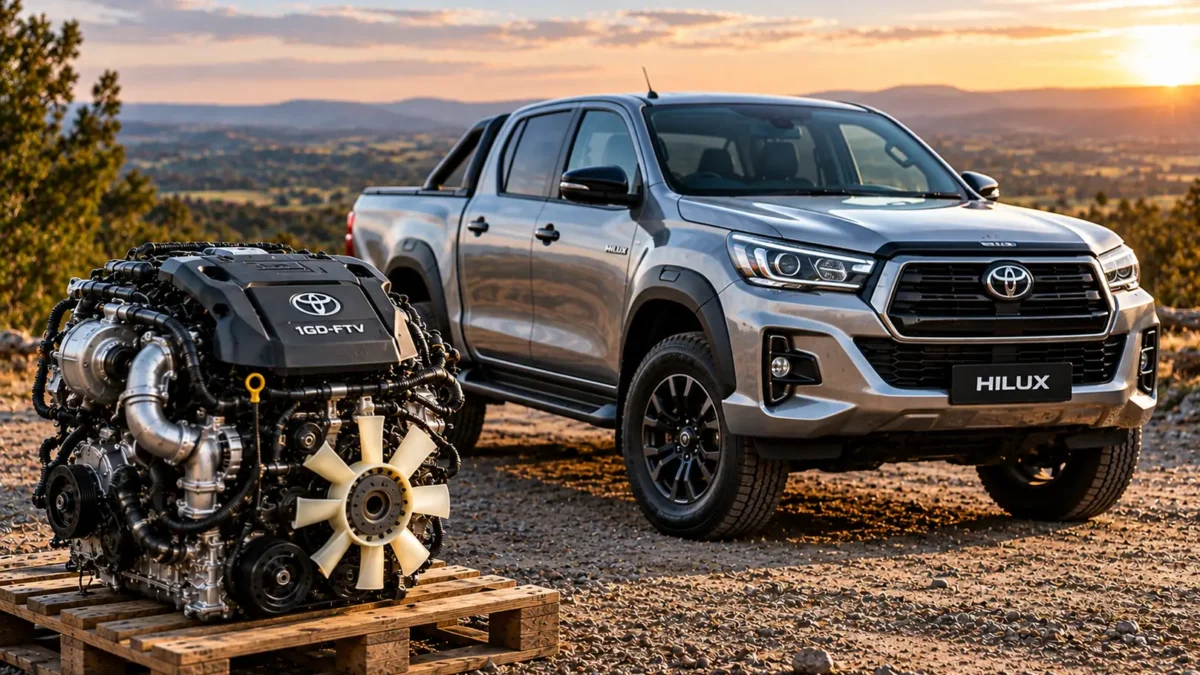
Table of Contents
- Toyota Hilux Common Problems at a Glance
- Which Engines Does the Hilux Use in Australia?
- The Hilux DPF Problem and the Class Action
- DPF symptoms and what causes them
- Exhaust (Fifth) Injector Faults on the 2.8
- EGR Cooler Leaks on the 2.8
- Timing Chain Rattle on the 2.8
- Airbox Dust Sealing (Earlier 2.8 Hilux)
- Turbo Oil Seep and Rear Main Seal Leaks
- 3.0L D-4D (1KD-FTV) Problems on the Older Hilux
- Automatic Transmission Heat
- Hilux Recalls in Australia
- Minor Issues
- Toyota Hilux Problems by Generation
- Signs Your Hilux Engine May Be Failing
- Repair or Replace a Hilux Engine?
- Buying a Used Hilux Engine
- What to Check Before Buying a Used Hilux
- Is the Toyota Hilux Reliable?
- Toyota Hilux Common Problems FAQs
- What are the most common Toyota Hilux problems?
- Is the Hilux 2.8 (1GD-FTV) engine reliable?
- What was the Toyota DPF class action?
- Can I still claim in the Toyota DPF class action?
- What are D-4D Hilux problems?
- Do Hilux engines have timing chain problems?
- Which Hilux years are best to buy?
- What are the problems with the new Hilux?
- Is the Hilux automatic transmission reliable?
- Is it worth replacing a Hilux engine?
The Toyota Hilux has earned its reputation, but “reliable” isn’t the same as “problem-free”. Hilux problems depend heavily on which generation and engine you’re looking at. The 2.8-litre 1GD-FTV diesel (2015 onwards) is best known for diesel particulate filter (DPF) trouble, which ended up in the Federal Court. The older 3.0-litre D-4D diesel is known for injector faults that can lead to cracked pistons. Both are covered below, along with the official recalls, what each symptom usually means, and what to check before you buy a used Hilux or a replacement engine.
Toyota Hilux Common Problems at a Glance
Each card shows the problem, which engines and years it applies to, and how serious it is. This isn’t a prediction for any individual vehicle.
DPF blockage and failed regeneration
- Engines: 2.8L 1GD-FTV and 2.4L 2GD-FTV diesel
- Years: Mostly 2015–2019; improved from 2020
- Symptoms: White smoke, DPF warning, limp mode, higher fuel use
- Severity: Moderate to high. Subject of a Federal Court class action
Exhaust (“fifth”) injector faults
- Engines: 2.8L 1GD-FTV
- Years: Mostly pre-2020 builds
- Symptoms: Warning lights, limp mode, smoke
- Severity: Moderate
EGR cooler leak
- Engines: 2.8L 1GD-FTV, higher-kilometre examples
- Symptoms: Unexplained coolant loss, overheating
- Severity: Potentially high if ignored
Timing chain rattle
- Engines: 2.8L 1GD-FTV, mainly earlier builds
- Symptoms: Rattle on start-up
- Severity: Moderate; serious if the chain jumps
Injector seal failure and cracked pistons
- Engines: 3.0L 1KD-FTV D-4D (older generation)
- Years: 2005–2015
- Symptoms: Loud knock, smoke, oil consumption
- Severity: High if ignored
Airbox dust sealing
- Engines: Earlier 2.8L Hilux, mainly 2015–2019 builds
- Symptoms: Dust past the air filter, MAF faults, limp mode
- Severity: Low to moderate; often a cheap fix
Automatic transmission heat
- Models: Automatics used for towing or sand driving
- Symptoms: Slipping, harsh shifts, burnt fluid smell
- Severity: Moderate; preventable
Which Engines Does the Hilux Use in Australia?
Engine availability changed with each generation. This is why “what engine is in my Hilux?” matters before you buy parts or a replacement.
Seventh generation (N70), 2005–2015
- Diesel: 3.0L 1KD-FTV D-4D, plus a 2.5L D-4D on some grades
- Petrol: 2.7L four-cylinder and 4.0L V6
- Note: Engine choice varied by grade and year
Eighth generation (N80), 2015–2025
- Diesel: 2.8L 1GD-FTV, with a 2.4L 2GD-FTV on entry grades
- Petrol: 2.7L four-cylinder on entry grades
- Note: The 2.8 was updated around 2020 to 150kW/500Nm with cooling and drivability changes
Ninth generation, December 2025 onward
- Engine: 2.8L 1GD-FTV only, across the whole range
- Dropped: The 2.4L diesel and 2.7L petrol
- Mild hybrid: A 48-volt system on some grades
- Electric: A battery-electric version was announced for 2026
- Status: Too new for a long-term reliability picture
The Hilux DPF Problem and the Class Action
This is the most significant Hilux issue in Australia, so here’s the documented picture.
What the Federal Court found: In April 2022, the Federal Court found that 264,170 Hilux, Fortuner and Prado vehicles with 1GD-FTV or 2GD-FTV diesel engines, supplied between 1 October 2015 and 23 April 2020, were not of acceptable quality under the Australian Consumer Law. The court also found Toyota had engaged in misleading or deceptive conduct. Toyota appealed and lost. The appeal court reduced the basis for damages but did not overturn the finding.
What owners experienced: White smoke on start-up, DPFs that clogged or failed to regenerate, and limp mode. The court heard that Toyota’s 2020 fix, a DPF software update plus a manual override switch, required several dealership visits for some vehicles.
What Toyota did: Toyota fitted a manual DPF burn-off switch (sources date this to 2018 or 2019) and rolled out a free DPF remedy from 2020. It also extended the DPF warranty to 10 years with no kilometre limit. In December 2020 it avoided ACCC penalties by agreeing to improve its compliance processes.
Where things stand now: The official class action website says the parties are in confidential settlement negotiations. It also lists a registration deadline of 26 August 2026, which has now passed. A separate “Taylor” proceeding covers people who bought an affected vehicle used by private sale between 24 April 2020 and 31 July 2025, with the same deadline. Check the Updates tab on the official site for anything that has changed since.
One thing to know before accepting a DPF repair: The class action’s lawyers state on their site that if you take up Toyota’s offer to repair the DPF, Toyota will argue you lose entitlement to compensation for reduction in value. Toyota’s position is that a free remedy has been available since 2020. Because this could affect your rights, get independent advice before deciding. This article isn’t legal advice.
What this means for buyers: If you’re looking at a 2015–2020 Hilux with the 2.8 or 2.4 diesel, ask whether the DPF update has been done, whether there’s a history of regeneration problems, and whether the vehicle has been through the class action process.
DPF symptoms and what causes them
Symptoms:
- White smoke, especially on start-up
- DPF warning light or limp mode
- Frequent regeneration cycles
- Higher fuel consumption
Cause: A DPF needs sustained, hot running to burn off soot. Short trips, low-speed driving and interrupted regenerations let soot build up. On the early 2.8, the court found the system itself was part of the problem, not just how the vehicle was driven.
What to check: Scan for stored codes and regeneration history. Check the dipstick: oil that’s rising above the maximum mark or smells of diesel is a reported sign of failed regenerations putting fuel into the sump.
How serious is it? Usually an emissions-system fault rather than internal engine failure. Persistent failed regenerations and oil dilution are worth fixing early.
Repair vs replacement: Almost never an engine-replacement issue on its own. Software updates, a forced regeneration, or DPF cleaning or replacement usually resolve it.
Exhaust (Fifth) Injector Faults on the 2.8
The 1GD-FTV has four injectors in the cylinders plus a fifth in the exhaust, which raises temperatures for DPF regeneration. Australian 4WD press reports say these failed often enough that Toyota redesigned them with better cooling around 2020–2021, so many earlier Hiluxes still carry the original design.
Symptoms: Multiple warning lights, limp mode and smoke.
What to check: Fault codes, and whether the part has been updated.
How serious is it? Moderate. It can look dramatic but is usually a component fault, not engine damage.
EGR Cooler Leaks on the 2.8
The EGR cooler sits against the engine block, and when it leaks, coolant can enter the engine rather than dripping onto the ground. That’s why it can be hard to spot.
Symptoms: Coolant level dropping with no visible leak, overheating, and in some cases coolant traces in the intake.
What to check: Check the overflow bottle weekly. Any unexplained loss deserves a pressure test.
How serious is it? Potentially high if ignored, because coolant entering the engine or an overheated engine can cause serious damage. Caught early, it’s a component replacement. It appears more on higher-kilometre examples.
Repair vs replacement: Replace the cooler. Engine replacement only becomes relevant if the engine has already overheated or suffered internal damage.
Timing Chain Rattle on the 2.8
The 1GD-FTV uses a timing chain with plastic guides. Reports from Australian workshops say the guides can wear on earlier builds, leaving the chain slack.
Symptoms: A distinct rattle, particularly on cold start-up.
What to check: Listen carefully on a cold start. This rattle sounds different from the injector clatter on the older D-4D.
How serious is it? Moderate if caught early. If the chain jumps a tooth, the damage can be severe, so don’t ignore a developing rattle.
Repair vs replacement: Chain and guide replacement can usually be done with the engine in the vehicle. A used-engine purchase only becomes relevant if the chain has jumped and caused valve or piston damage.
Airbox Dust Sealing (Earlier 2.8 Hilux)
On early 2.8 models, the airbox seal can let dust bypass the filter, particularly on unsealed roads. Australian 4WD press reported this causing MAF sensor faults and limp mode, and says it was addressed under warranty.
What to check: Remove the air filter and look for dust inside the airbox past the filter.
How serious is it? Usually cheap to fix if caught early. Ignoring it risks dirt entering the intake and engine.
Turbo Oil Seep and Rear Main Seal Leaks
Rare, but reported. A minor seep from the turbo oil line or the rear main seal shows up as oil misting at the back of the engine.
How serious is it? Low in the short term. Left alone, it can cause lubrication problems for the turbo or contaminate the transmission area.
3.0L D-4D (1KD-FTV) Problems on the Older Hilux
Hilux owners and used buyers often ask about this engine, because its faults are well known and can be expensive.
Injector seals and seats
- Symptoms: Loud knock, rattle on cold start, smoke, oil loss
- Cause: Leaking injector seals, and failing injectors that spray fuel unevenly
- Why it matters: Failing injectors can overheat and crack pistons. Leaking seals can also let combustion gases and soot into the oil, thickening it and potentially blocking the oil pickup
EGR carbon build-up
- Symptoms: Rough idle, black smoke, reduced power
- Fix: Regular cleaning as maintenance
Cracked pistons
- Affected: Engines built roughly 2004–2009, most commonly after 100,000–150,000 km in affected examples
- Fix: Usually a rebuild or replacement engine, since the engine has to come out
What to check on a used D-4D Hilux:
- Cold-start knock or rattle
- Injector test results and seat washer service history
- Oil condition and breather mist
- Compression test results if anything seems off
Automatic Transmission Heat
The six-speed automatic fitted to most N80 Hiluxes is generally regarded as sound. The weak point reported by Australian 4WD press is the factory transmission cooler, which can be overwhelmed by heavy towing or sand driving.
Symptoms: Slipping, delayed or harsh shifts, a burnt smell from the fluid.
Prevention: Many owners who tow regularly fit a larger transmission cooler.
How serious is it? Preventable, and usually only a concern for heavy use. A family vehicle with occasional weekend use is unlikely to be affected.
Hilux Recalls in Australia
All three below come from the Australian Government’s vehicle recall register.
Fuel pump recall (certain petrol Hiluxes)
- Register number: REC-001320
- What happens: The in-tank fuel pump may stop working, which can cause rough running, stalling and a failure to restart
- Hilux affected: Certain petrol (TGN121) models built from September 2017 to early 2019
- Background: Toyota Australia announced it in March 2020 and later expanded it. The register lists 75,905 vehicles across all affected Toyota models
- Remedy: Replacement fuel pump, free of charge
Tailshaft centre bearing bracket (older Hiluxes)
- Register number: REC-003322 (PRA 2010/11961)
- Vehicles: 116,482 Hiluxes
- Defect: On severely corrugated roads with many cattle grids, hard acceleration and braking could detach the tailshaft centre bearing brackets
- Worst case: The propeller shaft could detach
- Remedy: Inspection and rectification at a Toyota dealer
Electric power steering earth (recent builds with genuine bull bars)
- Register number: REC-006578 (campaign 6WU02), published 7 April 2026
- Vehicles: 13,390 Hiluxes built between 28 August 2025 and 24 February 2026
- Defect: On vehicles fitted with a Toyota Genuine Accessory bull bar or nudge bar with light bar, a wiring harness may have been incorrectly installed, which can compromise the earth connection to the power steering module so that assistance stops working
- Remedy: A dealer inspection and correction of the earth terminal orientation, free of charge
DPF: Toyota’s DPF remedy was a field fix rather than a conventional safety recall. It is covered in the DPF section above.
Always check recall status by VIN on the government register or with a Toyota dealer.
Minor Issues
These are mostly cosmetic or small, but they come up in used-Hilux discussions:
- Thin paint: Owners report paint wearing through on often-touched areas such as sills, sometimes within the first year.
- Door drain plugs: On some early N80 models from around 2015–2016, owners report drain plugs that were missing or blocked. Check for water sloshing inside the doors after rain or a water crossing.
Toyota Hilux Problems by Generation
Seventh generation (N70), 2005–2015
- Main engines: 3.0L (and 2.5L) D-4D diesel, 2.7L and 4.0L petrol
- Watch for: Injector seals, cracked pistons, EGR carbon, tailshaft bracket recall
- Note: Well-serviced examples often reach high kilometres; maintenance history matters most
Eighth generation, early (2015–2019)
- Main engines: 2.8L and 2.4L diesel, 2.7L petrol
- Watch for: DPF problems, fifth injector, airbox sealing, timing chain rattle, 2.7 petrol fuel pump recall
- Note: Inside the class action’s relevant period. Confirm the DPF fix and any compensation position
Eighth generation, later (2020–2025)
- Main engines: Updated 2.8L diesel (150kW/500Nm), 2.4L diesel and 2.7L petrol on entry grades
- Watch for: EGR cooler on higher-kilometre examples, automatic transmission heat if you tow
- Note: Often described as the sweet spot for buyers, because Toyota refined the DPF and fifth injector. Vehicles supplied after 23 April 2020 fall outside the class action’s relevant period
Ninth generation (December 2025 on)
- Engine: 2.8L diesel, with 48V mild hybrid on some grades
- Watch for: The 2026 power steering earth recall if fitted with a genuine bull bar or nudge bar
- Note: Too new for long-term fault patterns
If you’re researching a specific year, treat the engine fitted and the build date as more useful than the model year alone. The DPF class action and several recalls are defined by build window.
Signs Your Hilux Engine May Be Failing
- Coolant loss with no visible leak
- Overheating or temperature warnings
- Oil level rising above maximum, or oil smelling of diesel
- Heavy smoke: white (coolant or DPF issues), blue (oil), or black (diesel faults)
- Loud knocking or rattling that’s new or worsening
- Persistent limp mode that returns after a regeneration or fault clear
- Oil pressure warning
- Metal particles in the oil
- Low or uneven compression
One symptom alone often has a simple cause. Several together, or coolant and oil contamination, point toward genuine internal damage and need proper diagnosis.
Repair or Replace a Hilux Engine?
Usually worth repairing:
- DPF, fifth injector or EGR valve faults. These are emissions-system faults, not engine failure
- A minor turbo or seal leak
- Airbox seal repairs
- Timing chain and guide replacement, if caught before the chain jumps
Compare costs carefully:
- A D-4D with cracked pistons or confirmed bore damage
- An engine that has overheated after an EGR cooler leak
- A timing chain that has jumped and caused valve damage
Replacement often makes more sense when:
- There’s major internal damage on a high-kilometre engine
- Several significant faults appear together
- The repair quote approaches the cost of a tested replacement engine
Get a written quote for both options before deciding. Costs vary too much by vehicle, workshop and engine condition to give a reliable general figure.
Buying a Used Hilux Engine
Don’t buy on “Hilux 2.8” alone. Confirm:
- VIN of the Hilux the engine is going into
- Build date, since the 2.8 changed in 2020 and the DPF and fifth injector were revised
- Exact engine code: 1GD-FTV or 2GD-FTV, 1KD-FTV or 2KD-FTV, 2TR-FE petrol, and so on
- Engine specification, including whether it’s the earlier or the 2020-onward 2.8
- Diesel emissions equipment included and whether it matches your vehicle
- Transmission (manual or automatic) and drive (4×2 or 4×4)
- Sensors and electronics that need to match your wiring and ECU
- Ancillaries included: turbo, injectors, manifolds, EGR parts
- Kilometres and how they were verified
- Testing and compression results
- Warranty terms in writing, including labour and exclusions
- Return conditions
Don’t assume engines from before and after the 2020 update are interchangeable. Confirm by VIN with the supplier before you pay.
What to Check Before Buying a Used Hilux
- Cold start: Listen for knocking, injector clatter or a timing chain rattle
- Coolant level and condition: Look for signs of top-ups
- Oil: Check the level (is it above max?), colour and smell
- Exhaust smoke: White on start-up, blue or heavy black under load
- DPF history: Ask about the DPF update, regeneration frequency and warning lights
- Warning lights: Check they’re not being hidden by a recently cleared fault
- Service records: The best indicator of how the engine has been treated
- Airbox: Look for dust past the filter
- Automatic transmission: Check shift quality and look for a larger cooler if it has towed
- Recall history: Check by VIN
- A proper diagnostic scan, not just a dashboard check
- Signs of modification: DPF or EGR deletes are generally illegal on road-registered vehicles in Australia and can cause warranty, roadworthy and insurance problems
Is the Toyota Hilux Reliable?
Mostly yes, with specific exceptions you can identify in advance. The Hilux’s strengths are real: proven, conservative mechanicals, and a long record of high-kilometre examples when maintained well. Its weak points are also well defined: the early 2.8’s DPF system, the D-4D’s injector problems, and heat management for heavily-used automatics.
What decides how a given Hilux behaves:
- Engine and build date. A 2017 2.8 and a 2022 2.8 have different risk profiles.
- Use. A Hilux that does short suburban trips is harder on its DPF than one that regularly sees highway running. A Hilux that tows or works hard needs more attention to cooling and transmission temperatures.
- Servicing. Oil quality and change intervals matter, especially for the timing chain, turbo and DPF.
- History. An engine that has overheated once carries more risk than one that hasn’t.
Most Australian 4WD press and workshop commentary describes a well-maintained Hilux, particularly from 2020 onward, as a safe buy. That’s a general view rather than a guarantee for any individual vehicle.
Toyota Hilux Common Problems FAQs
What are the most common Toyota Hilux problems?
On the 2.8 diesel, the most discussed are DPF failure to regenerate, exhaust injector faults, EGR cooler leaks and, on earlier builds, timing chain rattle and airbox dust sealing. On the older 3.0 D-4D, injector seal failure and cracked pistons are the main concerns.
Is the Hilux 2.8 (1GD-FTV) engine reliable?
Generally yes when serviced correctly, but early builds from 2015–2019 had well-documented DPF problems. Later versions are widely regarded as better. Most major failures trace back to neglected maintenance or emissions-system faults rather than the core engine.
What was the Toyota DPF class action?
A Federal Court case over Hilux, Fortuner and Prado diesels with 1GD-FTV or 2GD-FTV engines supplied between October 2015 and April 2020. The court found them not of acceptable quality and Toyota lost its appeal. As of the class action site’s latest notice, the parties were in settlement talks and the registration deadline of 26 August 2026 had passed.
Can I still claim in the Toyota DPF class action?
The registration deadline listed on the official site was 26 August 2026. Check the Updates tab on the official class action website, or speak to the class action lawyers, for the current position. Also get advice before accepting a DPF repair, as the lawyers warn it could affect compensation.
What are D-4D Hilux problems?
Mainly injector seals and seats failing, which can flow on to cracked pistons, EGR carbon build-up and, in some cases, oil pickup blockage from sludged oil. A cold-start knock or rattle is a common early warning.
Do Hilux engines have timing chain problems?
Some earlier 2.8 engines can develop timing chain rattle from worn plastic guides. Catching it early usually prevents major damage, but a chain that jumps a tooth can cause serious engine damage.
Which Hilux years are best to buy?
Australian 4WD press commonly describes 2020-onward Hiluxes as the sweet spot, after the 2.8 update and DPF refinements. Earlier 2015–2019 models can still be excellent with good service history, but warrant closer DPF checks.
What are the problems with the new Hilux?
The ninth-generation Hilux only went on sale in December 2025, so there’s no long-term fault pattern yet. Its 2.8 engine is carried over from the previous generation, and a 2026 recall covered power steering earth connections on some vehicles fitted with genuine bull bars.
Is the Hilux automatic transmission reliable?
Generally yes. The main weakness reported is heat under heavy towing or sand driving, which many owners address with a larger transmission cooler.
Is it worth replacing a Hilux engine?
It depends on the fault. DPF, injector and EGR faults rarely justify replacing the engine. Major internal damage, such as cracked pistons or overheating damage, is where comparing repair and replacement costs makes sense.

Looking for this part?
Send one enquiry and reach Australian suppliers who handle your vehicle.
Request a quote